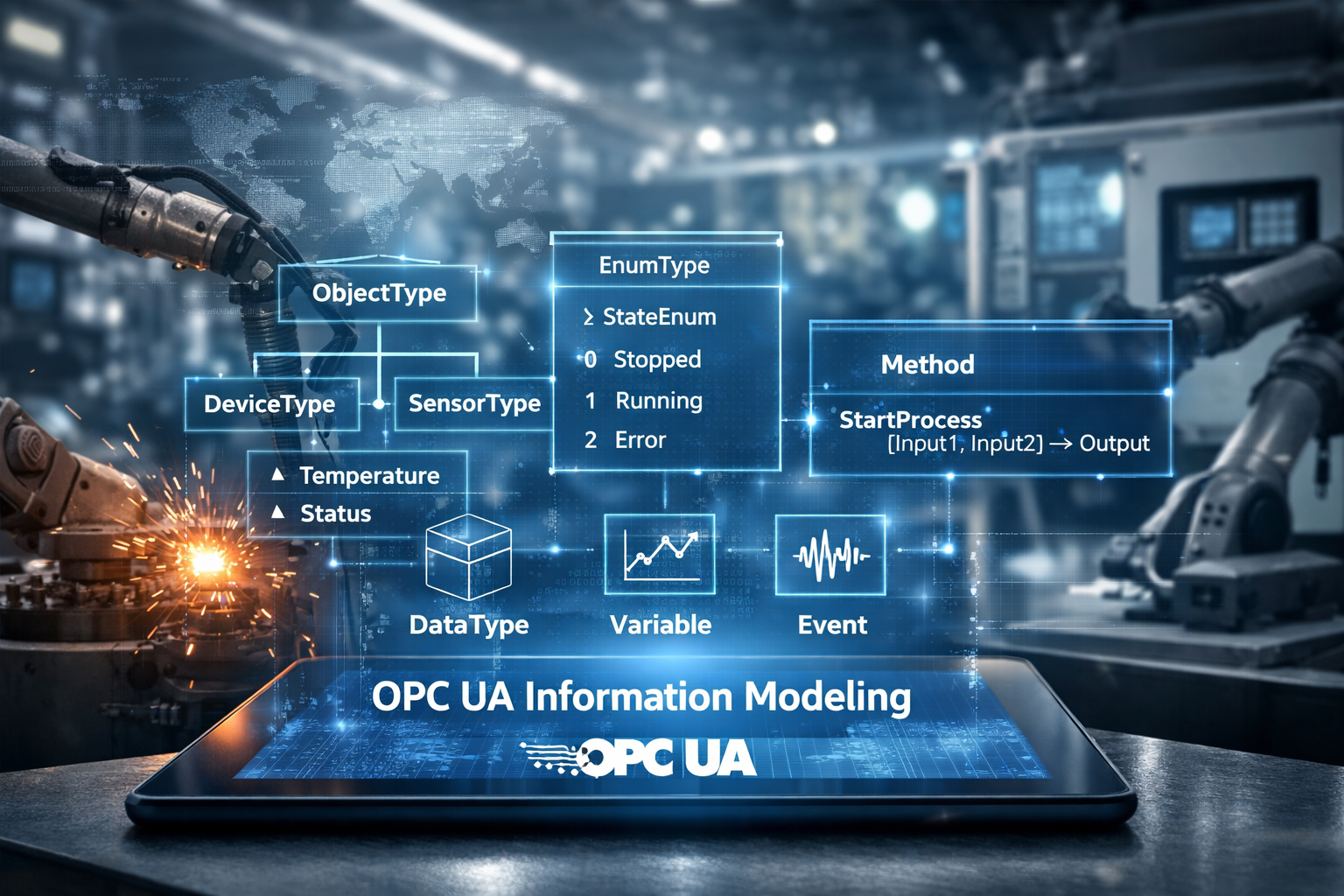
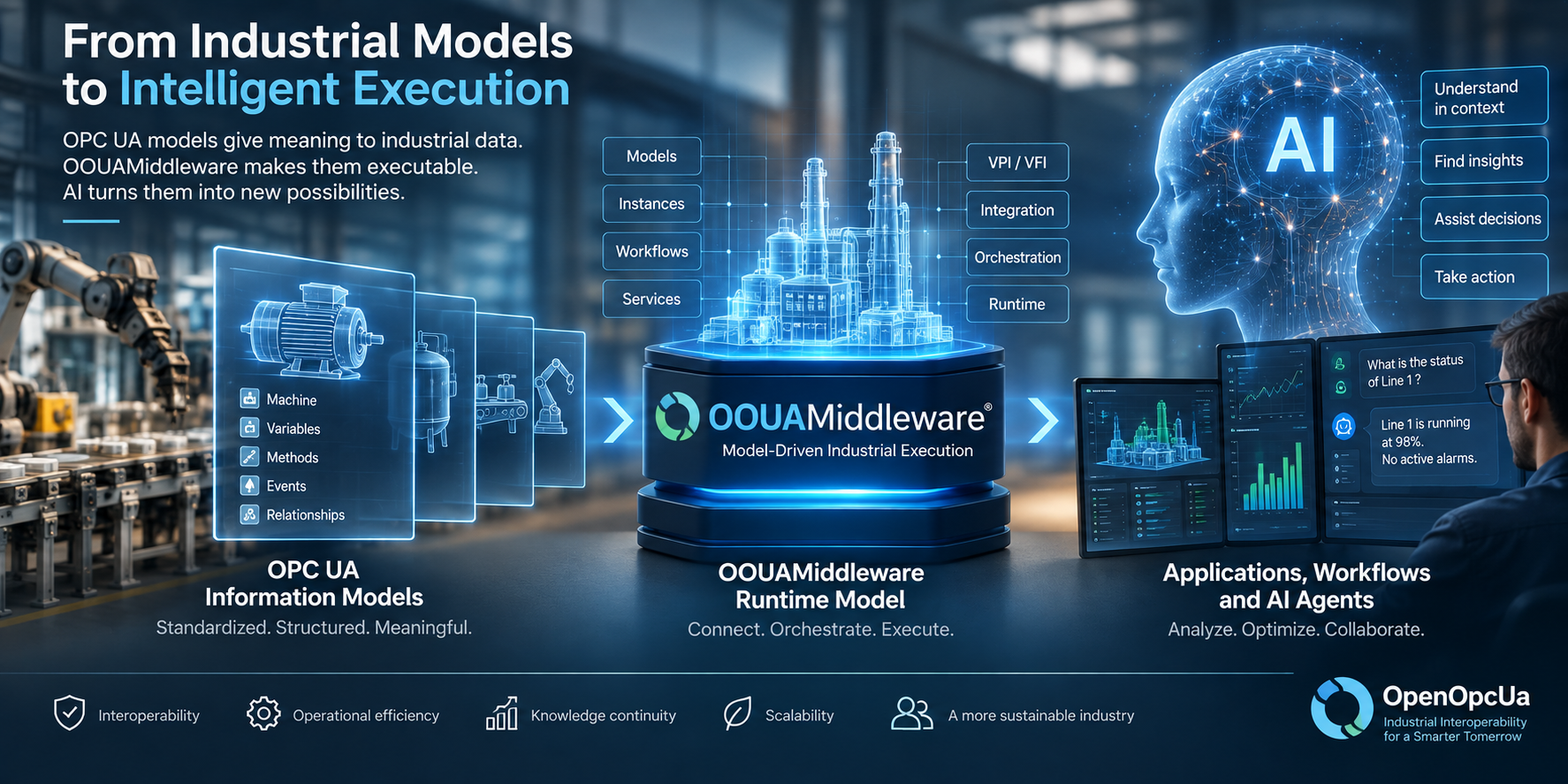
OPC UA and AI: Why Information Models Matter More Than Ever The emergence of Large Language Models and, more broadly, generative artificial intelligence is challenging many established software architectures.Industry is no exception.If AI can understand heterogeneous data, generate interfaces, create mappings and interpret different formats, do we still need structured interoperability standards such as OPC … Read more
OPC UA
OPC UA and Artificial Intelligence
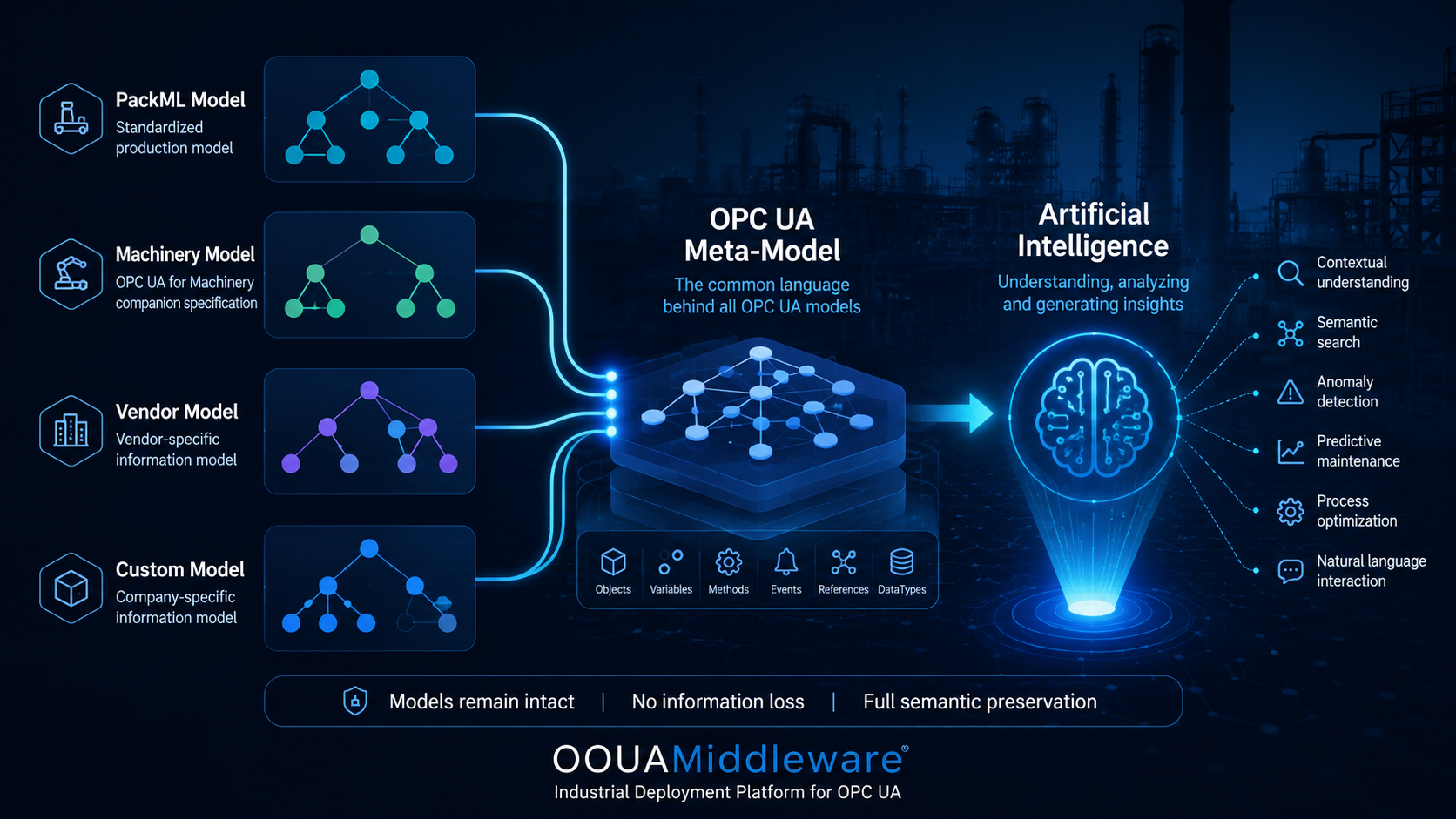
OPC UA and Artificial Intelligence Understanding Different Models Through a Common Meta-Model The Hidden Power of the OPC UA Meta-Model Artificial Intelligence is rapidly becoming a major topic in industrial automation.Large Language Models (LLMs), Retrieval-Augmented Generation (RAG), Digital Twins, and Agentic AI are creating new opportunities for analyzing, understanding, and interacting with industrial systems.However, AI … Read more
Secure Deployment of Industrial Communication Protocols
Industrial communication protocols are critical to modern automation, but many lack built-in security. This article explains how to secure them using a risk-based approach, combining IEC 62443, segmentation, gateways, and secure architectures.
OPC UA Information Modeling Best Practices
A critical industrial reading of the OPC Foundation UA Modelling Best Practices whitepaper, covering naming, backward compatibility, composition, data granularity, and the limits of specification-driven OPC UA modeling.
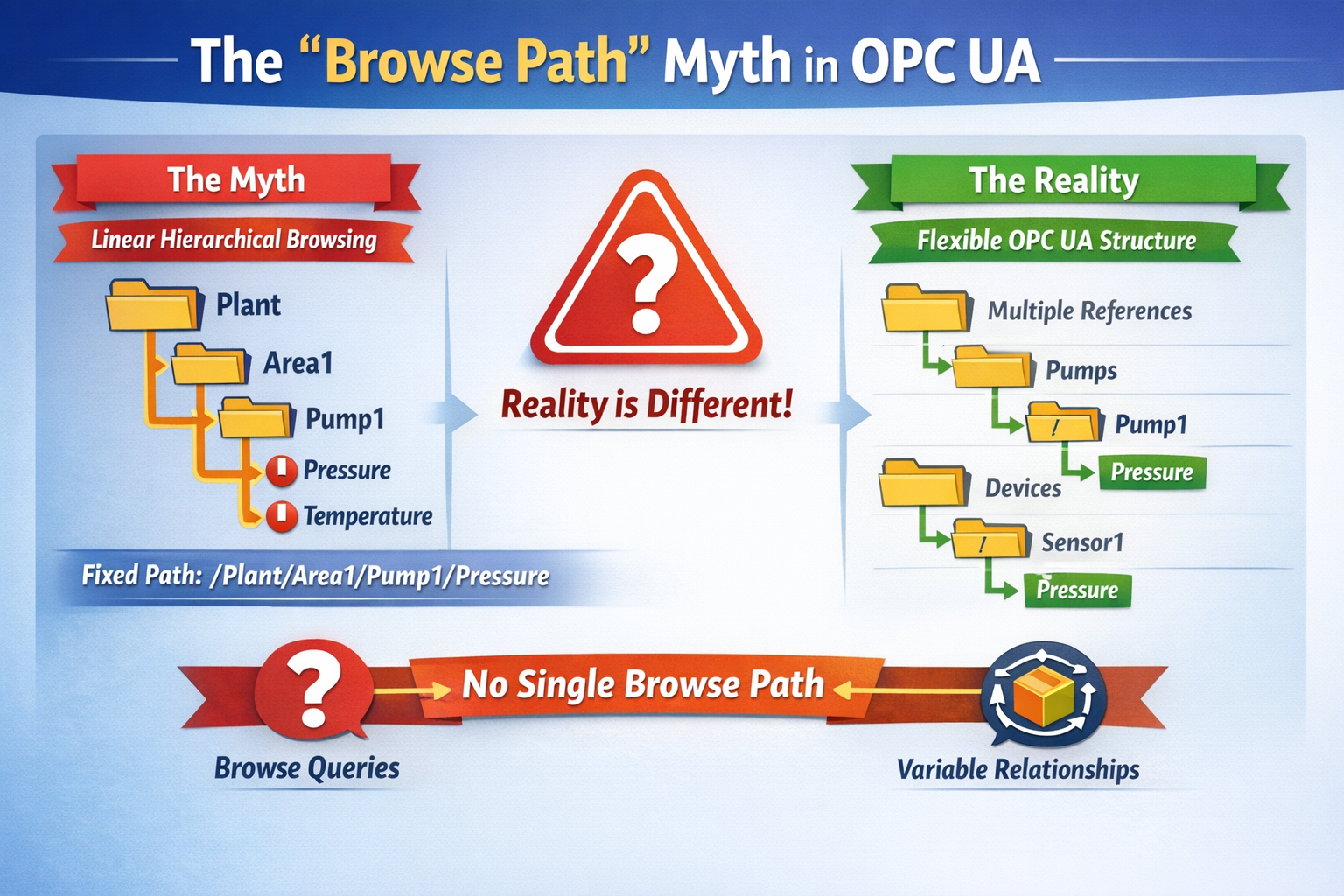
The “Browse Path” Myth in OPC UA
OPC UA does not define any textual Browse Path. This article explains why string-based navigation is a non-standard abstraction that contradicts the OPC UA information model.
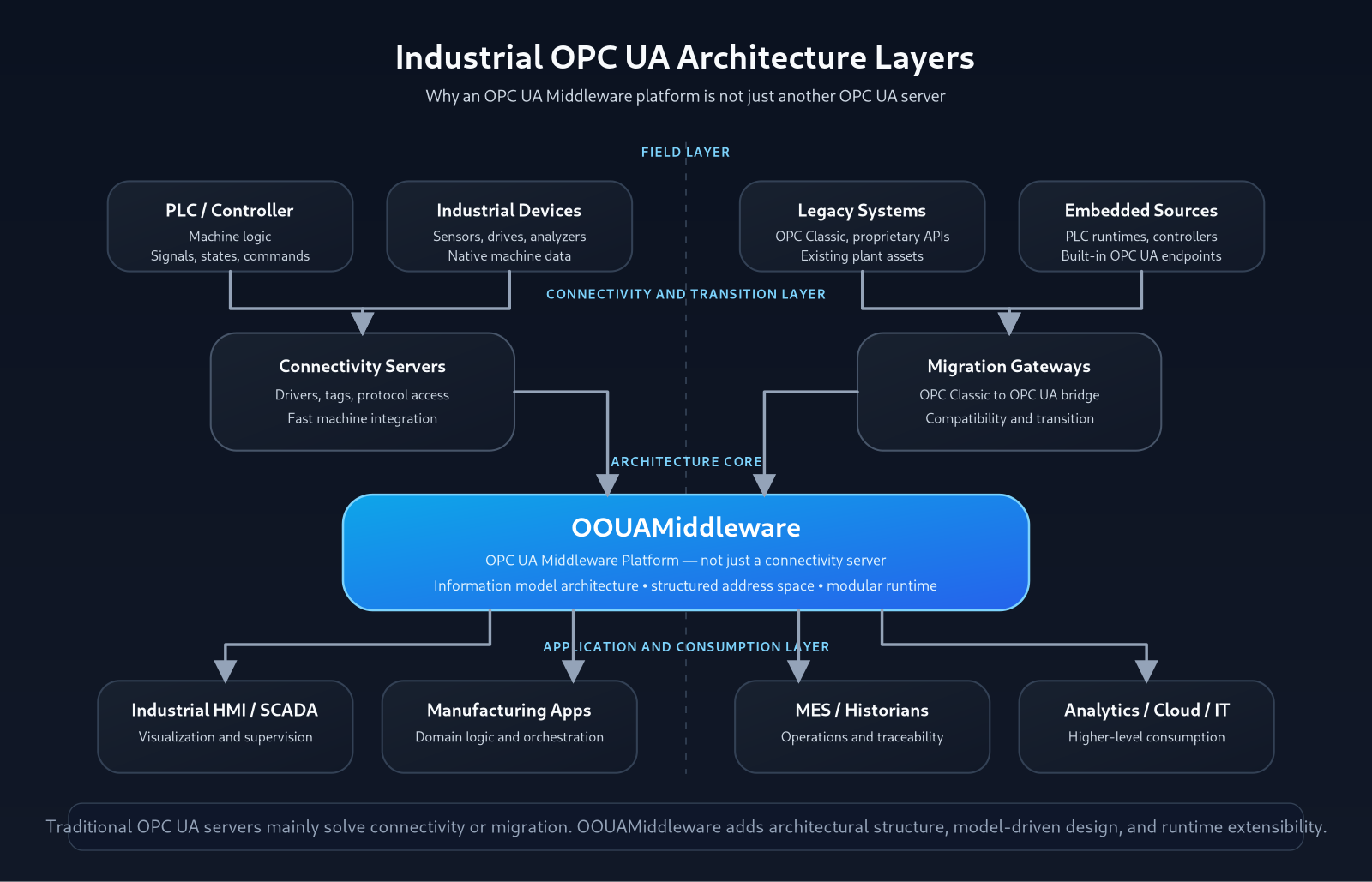
The 5 Architectural Mistakes When Choosing an OPC UA Server
The 5 Architectural Mistakes When Choosing an OPC UA Server. OPC UA has become the standard industrial interoperability platform.
Today, dozens of products are marketed as OPC UA servers, and selecting one may appear straightforward.
However, a frequent mistake is to assume that all OPC UA servers solve the same architectural problem.
In reality, OPC UA servers available on the market fall into very different categories, each designed for a specific role within industrial architectures.
Choosing the wrong category can introduce long-term limitations in scalability, maintainability, and information modeling.
This article highlights five common architectural mistakes when selecting an OPC UA server.
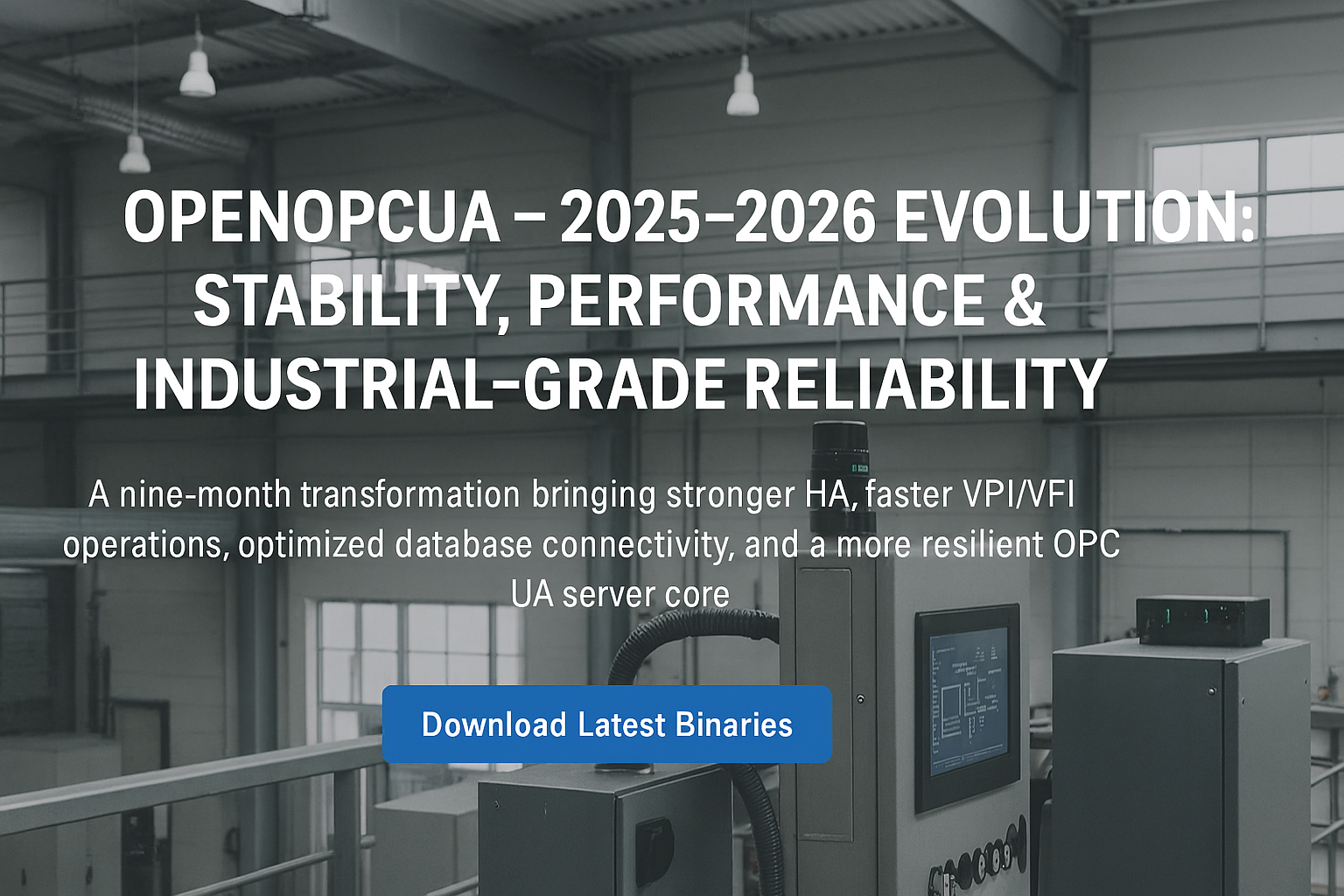
OpenOpcUa – 2025‑2026 Evolution: Stability, Performance & Industrial‑Grade Reliability
OpenOpcUa – 2025‑2026 Evolution: A nine‑month transformation bringing stronger HA, faster VPI/VFI operations, optimized database connectivity, and a more resilient OPC UA server coreappear straightforward.
However, a frequent mistake is to assume that all OPC UA servers solve the same architectural problem.
In reality, OPC UA servers available on the market fall into very different categories, each designed for a specific role within industrial architectures.
Choosing the wrong category can introduce long-term limitations in scalability, maintainability, and information modeling.
This article highlights five common architectural mistakes when selecting an OPC UA server.